Saturday, November 20, 2010
November Already?
No, I didn't intend to stop blogging once we brought the boat north, as that is the point where the adventure truly begins! It has been an eventful couple of months, but rather than go back and create historical entries, I choose to pick up in the present. You will no doubt see some references and photos related to adventures over the past few months.
Most recently we had our first official race on Ablissian. Yes, we did do one race on the Columbia a few months after buying the boat, but we had no PHRF rating at the time, so the results are suspect at best. This time we were official! We entered the Sloop Tavern Fall Regatta, held on October 16. Peter and I drove to Bainbridge from Portland on Friday night, then got up early Saturday morning to drive the boat across to Shilshole for the start of the race. We picked up our able crew - August and Lola - and joined the boats milling for the start.
I'll admit that the few experiences I've had in the past with sailboat racing have not inspired me to do more. Either we had no wind and moved at a snail's pace, or we were the slowest boat at the very back of the pack. This time was different, as we were able to make a respectable showing against other boats in our class, finishing 7th out of 11 boats. We had wonderful weather, with a good 10-15 knots of wind. We had a lot of fun switching off on handling the winches during tacks, and exploring what the boat can do. We are very much looking forward to more challenges in races coming up next season!
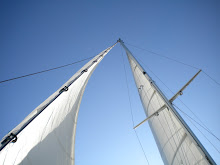
Here are a number of photos from our day of racing - the fantastic photos (and the one above) were all taken by August. He is an amazing photographer! Enjoy:
Friday, August 6, 2010
From Neah Bay to Bainbridge Island
After a peaceful night at anchor, we woke for an early start. We pulled up the anchor and I drove us out of the bay. We sighted a lovely Ketch coming toward us from the west, and I felt a sense of kinship imagining her recent travels off the coast.
We pulled out into the channel, turned right and headed east. The forecast was for a bit more wind today, so we looked forward to some sailing. We raised the main, which helped our progress, and the crew settled into the watch schedule. Deb took advantage of the warmth to read on the foredeck; Peter even napped a bit in the sails on the bow. August in the northwest.
As the day warmed, we removed coats and sweaters to feel the sun on our skin. We played with the auto-helm given the calm conditions. Look, no hands!
As the day passed, we realized that we would not make Port Townsend until after dark, so decided to anchor in Port Angeles. This was a good decision, as we had time to have a delicious meal and an early night.
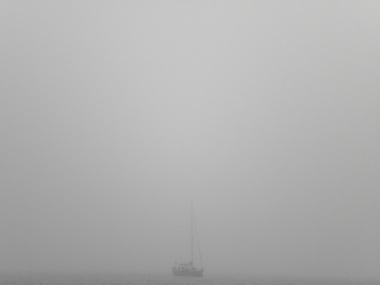
On Wednesday morning, we woke to heavy fog in the Strait. But such a difference in our view of this challenge. Our last boat had no radar, so heavy fog meant you go back to port and wait. Now, although we were very cautious, we could keep going. Visibility varied through the day from less than a mile to an estimated 3 miles, so it was reasonable to travel. We moved just ouside of the shipping channel, and watched the chart plotter and radar. We had a crew member on the bow and blew our air horn periodically as required.
We rounded the point and headed south. The trip from Port Townsend to Bainbridge Island is one we have done so many times on our prior boat, Zenobia, so it was very relaxing to navigate these waters. We raised all of the sails - the main, genoa and staysail.
The quiet was lovely, and we soon found ourselves reading, knitting and chatting in the cockpit. We hadn't expected this kind of slow, cruising relaxation on this leg of the trip, so everyone was very happy.
Wednesday, August 4, 2010
Up the Coast of Washington
Once across the bar, we made a right turn to head north. Our running rate on the engine is 2400 RPMs, so we can average about 5.5 knots in favorable ocean conditions (faster in flat water in-land). Our estimate to reach the Strait of Juan de Fuca was 36 hours.
As we moved further out into the ocean, the swells became larger, growing to 6 feet. These waves are so different from wind waves. They are larger, more or less regular but can change frequency and direction with no warning. These were mild conditions - I can only imagine what harsh conditions must be like! These waves gave us a slow carnival ride that increased sea sickness in the crew. Deb and I were the lucky exceptions. Everyone was using some form of sea sickness prevention - either a patch or Bonine - but with varying success. Poor Peter seemed to be suffering the most, and spent his off watch time reclining in the stern.
We settled into our agreed upon watch schedule; couples at two hour intervals. These were short watches, but we planned to continue the same schedule throughout the night and two hours seemed right for our first overnight experience in the ocean.
We watched the coastline recede as we moved farther off shore, until we lost sight of it all together. Our weather was gray and overcast, but not foggy. Watch followed watch as we worked our way north through the afternoon. Eventually we lost sight of land completely.
The crew was bundled up against the cold, but in great spirits, with a hot meal that helped to keep us warm. Thank goodness for a gimbaled stove. We were using our off - shift time to nap, in anticipation of a long night.
At one point Becky woke me to tell me they sighted whales off the stern! I quickly grabbed my camera and dashed up to snap as many shots as I could - these were not the Orcas I am used to seeing in Pudget Sound, but likely greys.
And Then it was night... what an experience! As I sat at the helm on my watch I found I could not see a thing - no sense of the horizon, little sense of up or down. It was very disorienting and unless I kept my eye on the compass, the boat was as likely to go in circles as it was to go straight. Peter and I shared our watches, passing the tiller back and forth at 10 minutes intervals as our eyes grew tired on our late shift. The crew was mostly silent, sitting at the helm on watch, then falling into the nearest available berth and asleep instantly.
Morning broke and we gathered as folks off shift woke and sought out breakfast. We exchanged stories from our watches - all had found it as disorienting as Peter and I did. But we had calm weather all night, with only fishing boats for occasional company, no large ships.

We gradually worked our way closer to shore as we neared the northern edge of our course. Late in the afternoon we spied land - Tatoosh Island off the Olympic Peninsula. We carefully rounded to the right to enter the Strait of Juan de Fuca - we have been in the Strait many times, but never the far western entrance, so this was yet another momentous occasion.
We decided to tuck into Neah Bay for the night so that all could get much needed rest. We dropped anchor and enjoyed a beautiful sunset and a celebratory toast to our successful voyage. We beat our estimate, clocking 34 hours from the Astoria dock.
As we moved further out into the ocean, the swells became larger, growing to 6 feet. These waves are so different from wind waves. They are larger, more or less regular but can change frequency and direction with no warning. These were mild conditions - I can only imagine what harsh conditions must be like! These waves gave us a slow carnival ride that increased sea sickness in the crew. Deb and I were the lucky exceptions. Everyone was using some form of sea sickness prevention - either a patch or Bonine - but with varying success. Poor Peter seemed to be suffering the most, and spent his off watch time reclining in the stern.
We settled into our agreed upon watch schedule; couples at two hour intervals. These were short watches, but we planned to continue the same schedule throughout the night and two hours seemed right for our first overnight experience in the ocean.
We watched the coastline recede as we moved farther off shore, until we lost sight of it all together. Our weather was gray and overcast, but not foggy. Watch followed watch as we worked our way north through the afternoon. Eventually we lost sight of land completely.
The crew was bundled up against the cold, but in great spirits, with a hot meal that helped to keep us warm. Thank goodness for a gimbaled stove. We were using our off - shift time to nap, in anticipation of a long night.
At one point Becky woke me to tell me they sighted whales off the stern! I quickly grabbed my camera and dashed up to snap as many shots as I could - these were not the Orcas I am used to seeing in Pudget Sound, but likely greys.
And Then it was night... what an experience! As I sat at the helm on my watch I found I could not see a thing - no sense of the horizon, little sense of up or down. It was very disorienting and unless I kept my eye on the compass, the boat was as likely to go in circles as it was to go straight. Peter and I shared our watches, passing the tiller back and forth at 10 minutes intervals as our eyes grew tired on our late shift. The crew was mostly silent, sitting at the helm on watch, then falling into the nearest available berth and asleep instantly.
Morning broke and we gathered as folks off shift woke and sought out breakfast. We exchanged stories from our watches - all had found it as disorienting as Peter and I did. But we had calm weather all night, with only fishing boats for occasional company, no large ships.
We gradually worked our way closer to shore as we neared the northern edge of our course. Late in the afternoon we spied land - Tatoosh Island off the Olympic Peninsula. We carefully rounded to the right to enter the Strait of Juan de Fuca - we have been in the Strait many times, but never the far western entrance, so this was yet another momentous occasion.
We decided to tuck into Neah Bay for the night so that all could get much needed rest. We dropped anchor and enjoyed a beautiful sunset and a celebratory toast to our successful voyage. We beat our estimate, clocking 34 hours from the Astoria dock.
Monday, August 2, 2010
Crossing the Columbia River Bar
What an adventure! The crew came aboard on Sunday morning about 8:30 after a night at local motels. All gear was safely stored and we carefully monitored weather and water conditions. A final check of oil and fluids and a call to the coast guard to double check conditions, which had been reported favorable on line.
We were told the Bar was actually closed to pleasure vessels under 22 feet. We waited another 30 minutes and the vessel size prohibited was reduced to 18 feet. We were at a point of departure that would have us on the Bar in slack going into a flood tide - ideal - so we decided to go.
We followed the channel carefully and kept our eyes on the horizon (fore and aft) and the radar for large ships. All went so smoothly - the water was full of swells (4 - 5 feet) so we had consistent motion, but as different as this was from our usual river waves, I didn't find it frightening. We did see breaking waves on either side of the channel, as we had read about. These were the conditions that can capsize a boat if you are swept outside of the channel.
We watched for ship traffic but did not see anything really large in the channel. We did see a yellow pilot boat deliver a pilot to a tug pulling a barge. The pilot boat drove along side the tug and the pilot simply stepped across, despite the rolling water.
Peter and Charley were starting to feel the effects of the motion - a bit of queasiness. But we were past Buoy #7, with just three buoys to go before the end of the channel, so we were almost through the first stage. At this point, the engine started to sputter and then died. Yikes! We had read that this is a frequent problem and often leads to problems as boats are swept out of the channel into dangerous waters. The usual cause is junk in the diesel which gets stirred up with the rough conditions. We were prepared - we have second fuel filter that we can switch to, we had additional filters and tools ready, and of course we are a sailboat, so we had our sails ready.
Step one was to raise a sail and get the boat under control. Unfortunately we found that one of the slides on the main sail had been put in upside down - the twist prevented the sail from rising. (Important lesson learned; always test the sails after you have removed them for any reason!) The crew was remarkably calm despite this setback.
I was concerned to note that we were now outside of the channel to the north, drifting toward Peacock Spit. Conditions were rough, so working on the foredeck was challenging, however Peter was on a tether and quickly raised the staysail, followed by the Genoa. Simon was at the helm and with the light wind was able to get the boat under control.
We were moving in the right direction, back in the channel! Charley checked the fuel filters but found that they were not clogged - instead it appeared that we had air in the fuel line, so he went below and bled the air from the line. Although we know how to do this, it was fantastic having Charley on board: as a mechanic, he was able to diagnose the problem and execute a fix much more quickly.
Everyone held their breath as we turned the key - but the engine roared to life and we cheered! The rest of the crossing was uneventful. Upon reflection, we were fortunate in that we stayed calm; we first worked to get the boat under control with sails; and we did not have issues with ship traffic.
Total time to cross was 3.5 hours from the time leaving the dock to passing the final buoy.
Monday, July 26, 2010
Travel to Astoria
This last weekend we went downriver to Astoria, which is the first leg of our trip to take Ablissian north to the San Juan and Gulf Islands. The trip started with a fond farewell to our slip in Tomahawk Bay, then quickly ground to a halt when we arrived at the railroad bridge, called for an opening and were told they were having electrical problems and couldn't open.
We circled and eventually sailed a bit while waiting, and after about an hour the bridge was opened and we started the motor and headed through. (the section on the right pivots to open the bridge)
This was our first time past the railroad bridge, so it was interesting to see the west end of Hayden Island, the junction of the Willamette and then Sauvie Island.
We motored through what has been referred to as the jewel of the Columbia, a section around Walker Island with packed beaches, lots of jet skis and water skiers. It was a really lovely section of the river.
As we traveled into the afternoon, we had a couple of close views of large ships - one of which passed us with little room to the side - and a second time a large Army Corps of Engineers vessel turned directly in front of us, forcing us to circle to avoid a collision. But it was all manageable.
By 3pm the winds had picked up considerably and we found ourselves moving through 4-5 foot waves and 20-25 knots of wind. Ablissian buried her bowsprit several times. But the boat handled this very well and it was comfortable in the cockpit. We were pleased to have a taste of this as it gave us more confidence for the off shore travel ahead of us. We later confirmed that we were experiencing a small craft advisory.
We eventually decided to anchor at the Clifton Channel and leave the last bit of travel for the morning instead of continuing in the rough water. We dropped anchor about 7:20pm. This was our first time anchoring Ablissian and we were successful on the first try. After a hot supper we did boat chores and turned in. I woke several times to check the anchor but it was holding solid.
In the morning we got underway about 6:20. There were some interesting rock formations and we saw more wildlife, including deer at the shore. The last miles prior to Astoria open out to a wide, marshy section. The channel is well marked and we were making excellent time with the current - up to 8 knots at one point!
Well before I expected it, we saw the Astoria Bridge in the distance, along with several very large ships anchored to the sides of the channel. We rounded Tongue Point, passed under the bridge, turned into the West Basin Marina and found our slip for the week. We called Taylor for our ride home and set about tidying the boat for departure.
She looks pretty good under the looming bridge!
We circled and eventually sailed a bit while waiting, and after about an hour the bridge was opened and we started the motor and headed through. (the section on the right pivots to open the bridge)
This was our first time past the railroad bridge, so it was interesting to see the west end of Hayden Island, the junction of the Willamette and then Sauvie Island.
We motored through what has been referred to as the jewel of the Columbia, a section around Walker Island with packed beaches, lots of jet skis and water skiers. It was a really lovely section of the river.
As we traveled into the afternoon, we had a couple of close views of large ships - one of which passed us with little room to the side - and a second time a large Army Corps of Engineers vessel turned directly in front of us, forcing us to circle to avoid a collision. But it was all manageable.
By 3pm the winds had picked up considerably and we found ourselves moving through 4-5 foot waves and 20-25 knots of wind. Ablissian buried her bowsprit several times. But the boat handled this very well and it was comfortable in the cockpit. We were pleased to have a taste of this as it gave us more confidence for the off shore travel ahead of us. We later confirmed that we were experiencing a small craft advisory.
We eventually decided to anchor at the Clifton Channel and leave the last bit of travel for the morning instead of continuing in the rough water. We dropped anchor about 7:20pm. This was our first time anchoring Ablissian and we were successful on the first try. After a hot supper we did boat chores and turned in. I woke several times to check the anchor but it was holding solid.
In the morning we got underway about 6:20. There were some interesting rock formations and we saw more wildlife, including deer at the shore. The last miles prior to Astoria open out to a wide, marshy section. The channel is well marked and we were making excellent time with the current - up to 8 knots at one point!
Well before I expected it, we saw the Astoria Bridge in the distance, along with several very large ships anchored to the sides of the channel. We rounded Tongue Point, passed under the bridge, turned into the West Basin Marina and found our slip for the week. We called Taylor for our ride home and set about tidying the boat for departure.
She looks pretty good under the looming bridge!
Wednesday, July 14, 2010
Getting Closer
We have been working hard to gather all the needed items for the boat - getting ready to head north! Great news on our crew - we are confirmed with a great group to head north with us.
Simon, Becky, Charley and Deb.
We were out with Simon and Becky on Saturday evening - lovely sail with good wind, followed by dinner in the cockpit. Very nice.
Simon, Becky, Charley and Deb.
We were out with Simon and Becky on Saturday evening - lovely sail with good wind, followed by dinner in the cockpit. Very nice.
Deb and Charley with us tonight on a peaceful evening sail. We used just our staysail which kept the boat comfortable in 15+ knts of wind.
While none of us has yet crossed the Columbia Bar and gone north, our crew can claim voyages to Hawaii, Europe and the Straits of Georgia and Juan de Fuca.
The list of things to do before leaving seems to be getting longer rather than shorter. Isn't that always the way? One more weekend of tasks, then the following weekend we take the boat to Astoria to wait for our departure.
Monday, June 28, 2010
More Canvas
Despite the delay in posting, we have not been delayed in continued efforts to make boat improvements! Yes, the main sail cover is complete, and turned out very well. I will add the slits for the lazy jacks when we have them positioned.
See the contrast with the old teal colored dodger top? We've removed the windows here, but left the top for sun and rain cover, but such a sad mix of old and new!
So, the job continues. After an intense weekend of sewing, the new dodger top is complete and the boat looks better for it:

Peter has been busy selecting and buying a radar package, which will be installed this week. I'll spend next weekend working on the dodger windows and side pieces, and maybe we will even go sailing! All of this work is in preparation for taking the boat north the first week of August. Of course we have been sailing over the last couple of weeks, despite a very rainy June here in the Northwest.
Searching for wind? Anticipating rain? We had a little of both this day.
See the contrast with the old teal colored dodger top? We've removed the windows here, but left the top for sun and rain cover, but such a sad mix of old and new!
So, the job continues. After an intense weekend of sewing, the new dodger top is complete and the boat looks better for it:
Peter has been busy selecting and buying a radar package, which will be installed this week. I'll spend next weekend working on the dodger windows and side pieces, and maybe we will even go sailing! All of this work is in preparation for taking the boat north the first week of August. Of course we have been sailing over the last couple of weeks, despite a very rainy June here in the Northwest.
Searching for wind? Anticipating rain? We had a little of both this day.
Subscribe to:
Posts (Atom)